
In short: In the honey course of the LWG Bayern (2021), you taste honey one step at a time: first look and smell, then taste and feel the texture. You can do this at home, at the kitchen table, with the whole family.
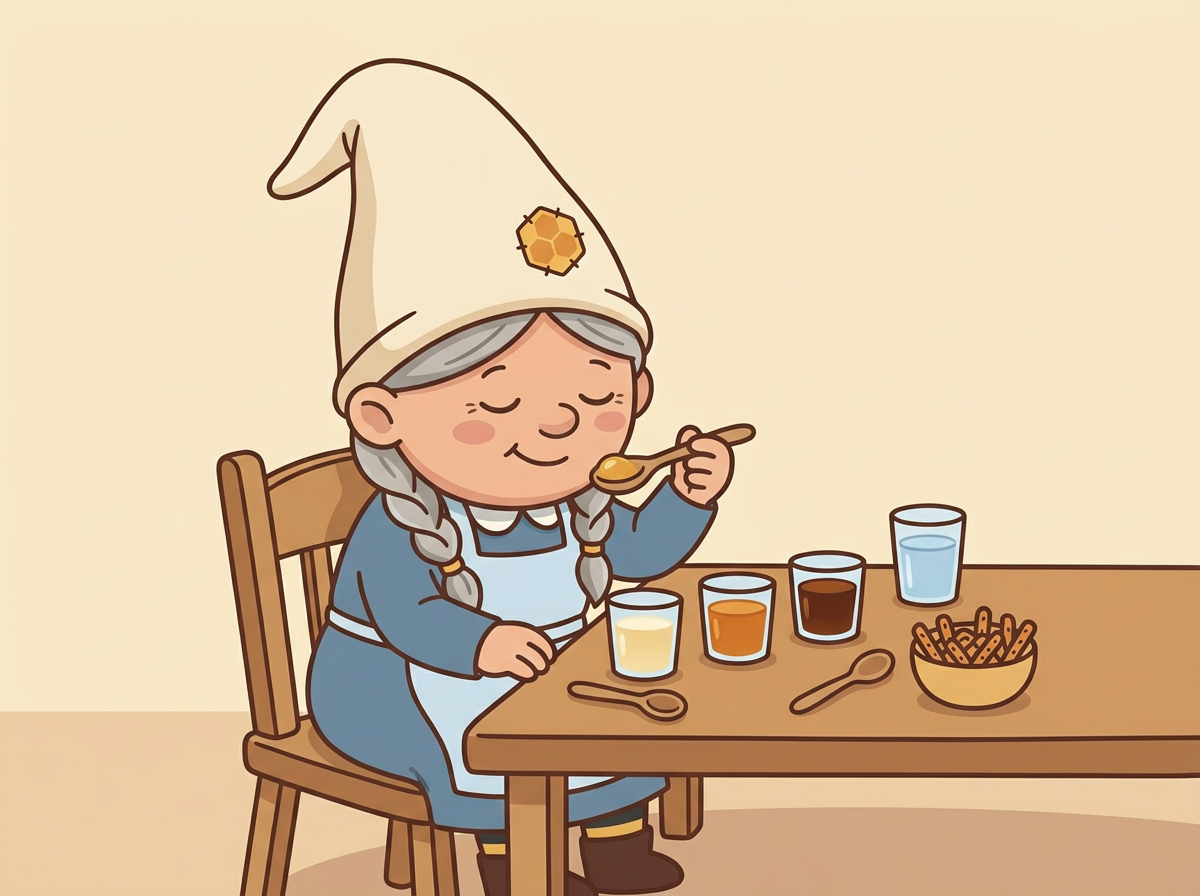
What you need
- Honeys
- a few varieties
- Spoons
- one for each sample
- A glass
- for the used spoons
- Water
- to drink in between
- Salt sticks
- to neutralise
Contents
How to go about it
- Appearance: Look at the colour. Is the honey liquid or already crystalline?
- Smell: Open the jar and smell. You check the smell before you taste.
- Taste: Take a little on the spoon and let the honey melt slowly on your tongue.
- Texture: Is it liquid, creamy, or can you feel small crystals?
- In between: Drink water and nibble a salt stick, then your tongue is free for the next sample.
Solid honey is not a flaw: Why does honey set solid?
For the order of the varieties, the tart ones come first and the sweet ones after, for example forest honey before blossom honey.
A fresh spoon for every sample.
Words for taste
In the course, an “Aromarad” (aroma wheel) helps with naming flavours. To start with, a few words that the Leitsätze für Honig (the German honey guidelines) use will do:
- Acacia honey (black locust): mild, faintly floral
- Linden honey: minty, slightly bitter
- Forest honey: spicy, malty
Find some words of your own, too.
Good to know
Honey quickly picks up other smells. Close the jars again after the tasting and do not put them next to anything with a strong smell. More: How to store honey.
Only an analysis can tell whether a jar really is a particular variety.
For parents
Honey is not for babies under one year. Older children like to sit at the table with you. More at Honey and babies.
Which variety first? The honey quiz suggests one.


