

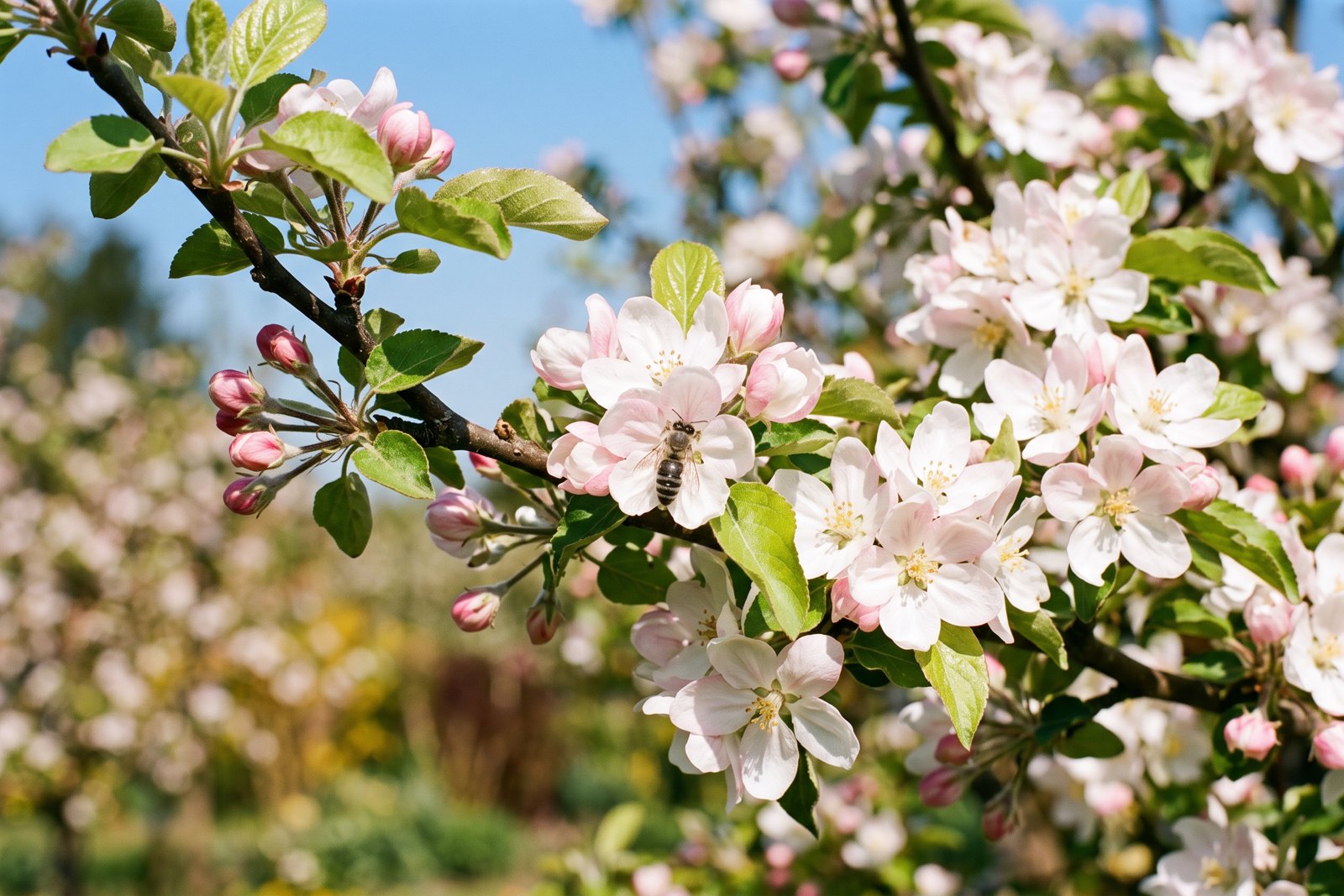
The cultivated apple (Malus domestica) flowers in May and June, white with a hint of pink. Depending on its form it grows one to fifteen metres tall. The wild apple (Malus sylvestris) flowers as early as April and May, white or pink, and grows eight to ten metres tall.
Fact sheet
- Growth
- fruit tree
- Flowers
- May to June, white with a hint of pink
- Bee forage
- nectar and pollen very good
Source of these details: Baden-Württemberg bee forage catalogue.
Contents
What it gives the bees
For the cultivated apple the catalogue gives nectar and pollen as “very good” and writes: “good bee forage; many varieties suitable as bee forage plants”. For the wild apple, nectar and pollen are also “very good”. Sweet cherry and plum flower in April, and they too are “very good” for nectar and pollen.
And the other fruit trees?
The pear is “medium” for nectar and “good” for pollen. The catalogue recommends only varieties with single flowers. In many landscapes a forage gap follows the rapeseed and fruit blossom.
Bees and apples
According to LAVES Celle, honey bees are very good pollinators: many foragers are out, and they stay with one kind of flower (flower constancy, Blütenstetigkeit). Good pollination brings more seeds and, in the apple, optimal fruit growth. At fruit blossom time, beekeepers place colonies in the orchards and receive a pollination fee from the fruit growers. Where there is no beekeeper nearby, garden owners notice it at fruit blossom time, according to LAVES. You will find more garden ideas at Allotment gardens in Leipzig.


