

In brief: you melt wax in a solar, steam or electric wax melter, or boil it out. According to the LVSI (Landesverband Sächsischer Imker, Saxon beekeepers’ association; as of 2019), members can borrow equipment; ask them what is available. Old wax can accumulate residues; the D.I.B. (Deutscher Imkerbund, German Beekeepers’ Association) advises taking most of it out of circulation. A pollen trap and a propolis grid collect the product at the hive entrance and in the hive. Ask the authority before you sell propolis, because the sources are older.
Contents
Equipment loans in Saxony
On its page “Verleih von technischen Geräten” (equipment loans; as of 2019), the LVSI lists equipment bought with funds from Saxony and the EU. Members borrow it free of charge through the head office: three disinfection lines for foulbrood clean-up, three “VarroaController” units and two wax-cleaning units. The steam wax melter of the disinfection lines can also be used to remelt wax; where there is foulbrood, the clean-up comes first. The wax-cleaning units heat wax without water to 160 °C for at least half an hour. You are liable for damage and return the equipment clean. The page dates from 2019, so ask the LVSI what is available.
Wax in circulation
The D.I.B. brochure “Wachs – ein unterschätztes Bienenprodukt” (“Wax – an underrated bee product”; file dated 2025) calls virgin wax from drone and wild comb, and cappings wax, the best quality. Old wax from old combs can accumulate residues, for example from Varroa treatments and plant protection products. The D.I.B. recommends taking most of it out of circulation, for candles or wood protection for example, but not for hives, and melting it separately. Processing does not remove residues; they come back in the foundation. Dispose of old, contaminated or adulterated wax; do not pass it on to dealers. If a processor handles your wax, keep retained samples and the invoice. If your own wax is not enough, use only tested foundation made of pure wax, with documentation.
How beeswax is made up and what it is used for is covered at Beeswax (in German).
Wax melters
From Bavaria, the LWG (“Bienenwachs”, no year) names these methods:
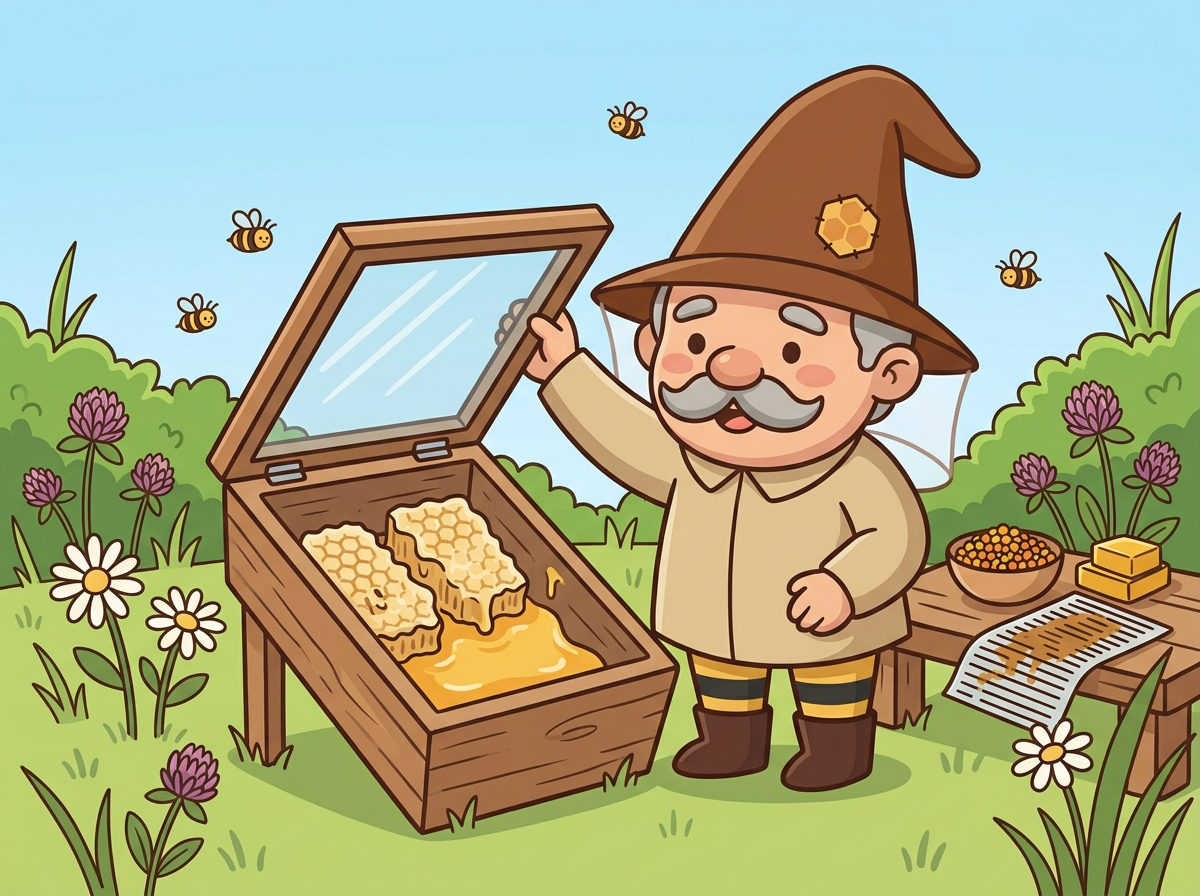
- Dry: the solar wax melter saves energy, but the yield is usually low; with reflectors and insulation it reaches over 120 °C. The electric melter is now used almost only for cappings wax and overheats easily.
- Wet: boiling out in water (copper, enamel, stainless steel) with hot pressing gives the best yield, using a screw or hydraulic press.
- The steam wax melter lets the wax run into a collecting vessel.
- Iron, damaged enamel and steel are unsuitable because the wax darkens.
For sterilising, the LWG gives: 30 minutes in the steam wax melter from the start of boiling, or 1 hour at 112 °C without water, or up to 160 °C. Fill the boiler to no more than two thirds.
Pollen trap
The sources are older: the LAVES pollen fact sheet (Lower Saxony, 2006) and the LWG (Bavaria, as of 06/2004). The pollen trap is a grid with holes in front of the hive entrance, which the bees squeeze through. The pollen loads drop into a collecting tray; afterwards you clean and dry the pollen and freeze it if possible.
The LWG places the trap in front of the entrance, under the brood chamber (instead of the floor) or on top. You take up to 100 g a day, and only when plenty of pollen is available (April to June). Pollen is dried in the air in the dark or in a dryer below 40 °C. Kept cool and dry at under 6% water, pollen lasts up to 1.5 years, or you freeze it. Pollen from elsewhere carries the risk of passing on diseases. More about the product itself: Pollen and bee bread (in German).
Propolis grid
Again from Bavaria, the LWG (hive accessories, no year) describes the propolis grid as a flexible plastic plate with narrow longitudinal slits that you lay on the frames. The bees seal the slits with propolis. From Lower Saxony, the LAVES adds (propolis fact sheet, 2006): grids with a mesh under 5 mm, or scraping hive parts. You freeze the sealed grid and tap it clean, because it turns brittle in the cold; then you clean the propolis and break it up while frozen. The LAVES gives a harvest of about 100 g per colony per year.
On the law there is only older information. According to the LAVES (2006), a beekeeper may sell only raw propolis. The LWG (no year) writes: a tincture is a finished medicinal product and permitted only through pharmacists; a cream falls under cosmetics law. Ask the authority about the current legal position before you sell anything. The word itself is explained in our beekeepers’ glossary “Imkerdeutsch”: Propolis (in German).

Ask first.


